Aging in Place Victoria BC: A Complete Guide for Seniors and Families
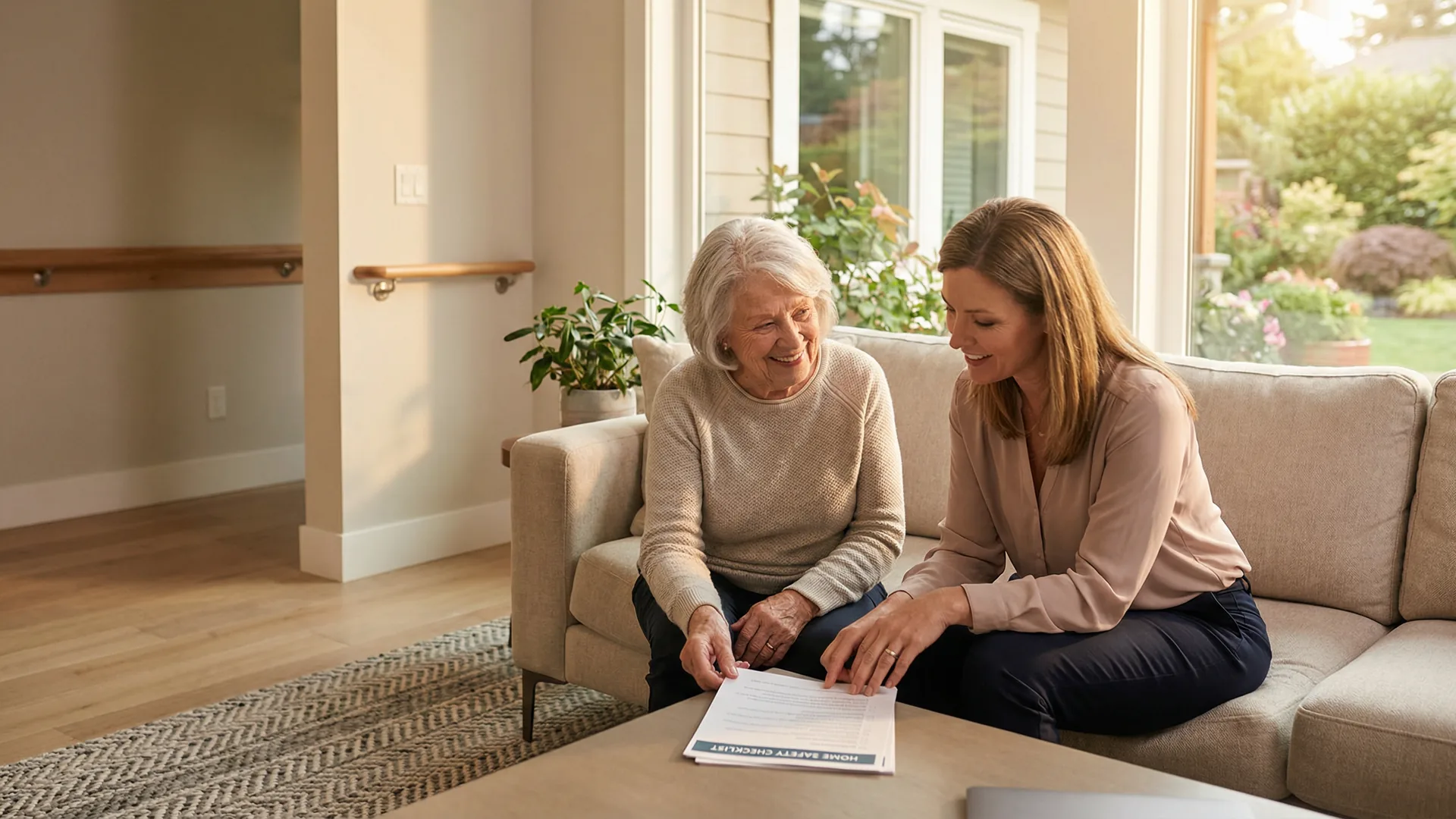
The moment a doctor says “your loved one can go home” is both a relief and a turning point. For families across Victoria BC, it raises an urgent question: how do we make home safe enough to stay? Aging in place Victoria BC is the goal for the vast majority of seniors — and it is entirely achievable with the right plan. Whether your loved one is navigating early mobility challenges, recovering from surgery, or managing a chronic condition, staying safely at home is possible with the right combination of home modifications, community resources, and professional home care for seniors in Victoria BC. This comprehensive guide covers everything Victoria families need to know — from room-by-room safety checklists and BC government subsidies to the true cost of home care versus assisted living.
Quick Answer: What is aging in place?
Aging in place means a senior choosing to live in their own home safely, independently, and comfortably as they grow older, rather than moving to a residential care facility. In Victoria BC, successful aging in place typically requires a combination of home safety modifications (like grab bars and ramp access), community resources, and professional home care support to assist with daily activities, medication management, and fall prevention.
Table of Contents
- Why 95% of BC Seniors Want to Age in Place
- Is Aging in Place Right for Your Loved One?
- The 7 Key Pillars of Successful Aging in Place
- Room-by-Room Home Modification Guide
- Technology That Makes Aging in Place Safer
- BC Government Subsidies and Funding for Aging in Place
- Island Health Home Care Assessment — How It Works
- The Cost of Aging in Place vs. Assisted Living in Victoria BC
- When Aging in Place Is No Longer Safe — Warning Signs
- Victoria BC Case Studies: Real Families, Real Solutions
- Local Victoria Resources for Seniors
- How Professional Home Care Makes Aging in Place Possible
- Why Executive Home Care for Aging in Place in Victoria BC
- Frequently Asked Questions
Why 95% of BC Seniors Want to Age in Place
The desire to remain at home is nearly universal among older adults. According to the BC Seniors Advocate, approximately 95% of seniors in British Columbia live independently in their own homes or with family.[1] Recent national surveys echo this sentiment, with 75% to 90% of adults over 50 stating they want to stay in their current homes for as long as possible.[2]
The reasons are deeply personal and practical:
- Familiarity and Comfort: Home is filled with decades of memories, familiar routines, and a sense of belonging that cannot be replicated in a facility.
- Community Connection: Staying in Victoria means remaining close to established social circles, neighbours, local shops, and preferred healthcare providers.
- Independence and Autonomy: Aging in place allows seniors to maintain control over their daily schedules, meals, and lifestyle choices.
- Financial Considerations: With the rising costs of assisted living and long-term care, modifying a home and hiring in-home support is often more cost-effective, especially for couples.
- Health Outcomes: Studies consistently show that seniors who age in place often experience better mental health, lower rates of depression, and a slower decline in cognitive function compared to those who move to institutional settings.
However, wanting to stay home and being safe at home are two different things. Without proper planning, the family home can become a landscape of hidden hazards.
Is Aging in Place Right for Your Loved One?
Aging in place is not a one-size-fits-all solution. It requires an honest assessment of the senior’s current health, the physical environment of the home, and the availability of support.
When evaluating whether aging in place Victoria BC is the right choice, consider these three critical areas:
1. Physical and Cognitive Health
- Can they manage Activities of Daily Living (ADLs) such as bathing, dressing, and toileting independently, or do they need assistance?
- Are they managing their medications correctly? Medication errors are one of the most common and preventable causes of hospitalization among seniors — professional Medication Management services eliminate this risk.
- Is there a history of falls or mobility issues?
- Are there signs of cognitive decline, such as leaving the stove on, getting lost, or forgetting appointments?
2. The Home Environment
- Are there stairs required to enter the home or access the main living areas (bedroom, full bathroom, kitchen)?
- Are doorways wide enough to accommodate a walker or wheelchair if needed?
- Is the bathroom safe, or does it require stepping over a high tub wall?
- Is the home generally well-maintained, or are there tripping hazards like loose rugs and poor lighting?
3. Support Network
- Do family members live nearby in Victoria, Saanich, or Oak Bay to provide regular check-ins and assistance?
- Is the primary family caregiver experiencing burnout?
- Are they open to accepting professional home care services to supplement family support?
If the home presents significant safety risks that cannot be modified, or if the senior requires 24/7 complex medical nursing that cannot be managed at home, a transition to a facility might be necessary. However, for the vast majority, proactive modifications and support make aging in place entirely feasible. If you are unsure whether aging in place is the right choice, Executive Home Care offers a free consultation to help families assess their options — call 250-213-6836 today.
The 7 Key Pillars of Successful Aging in Place
To successfully age in place, families must build a comprehensive plan that addresses all aspects of a senior’s life. Executive Home Care identifies seven key pillars:
- Health and Medical Management: Coordinating doctor appointments, managing chronic conditions, and ensuring medication adherence through professional Medication Management.
- Home Safety and Accessibility: Modifying the physical environment to prevent falls and accommodate mobility aids.
- Personal Care Support: Assistance with bathing, grooming, and hygiene to maintain dignity and health.
- Nutrition and Meal Planning: Ensuring access to healthy, regular meals through professional Nutrition & Meal Coordination, especially when cooking becomes difficult or unsafe.
- Transportation and Mobility: Arranging safe travel to medical appointments, grocery stores, and social outings when driving is no longer an option.
- Social Connection and Engagement: Preventing isolation and loneliness through Companion Care & Social Support, community programs, and family visits. Social isolation is linked to a 26% increased risk of dementia and significantly higher rates of depression in seniors.
- Financial and Legal Planning: Having Power of Attorney, representation agreements, and a clear understanding of the budget for home care and modifications.
Room-by-Room Home Modification Guide
The most critical step in aging in place is adapting the home to prevent falls. Falls are the leading cause of injury among seniors in BC, but many are preventable with targeted modifications.[3] Effective fall prevention begins with a room-by-room hazard assessment — the same process Executive Home Care conducts during every Fall Risk Assessment & Home Safety Audit.
Here is a room-by-room guide to essential safety upgrades:
The Bathroom (Highest Risk Area)
- Install Grab Bars: Place sturdy, professionally installed grab bars inside the shower/tub and next to the toilet. Never rely on towel racks or suction-cup bars.
- Non-Slip Surfaces: Apply non-slip decals or mats inside the tub and use non-skid rugs on the floor.
- Shower Seating: Add a stable shower chair or transfer bench.
- Raised Toilet Seat: Install a raised toilet seat or a comfort-height toilet to make sitting and standing easier.
- Walk-In Shower: If budget permits, convert a traditional tub into a curbless, walk-in shower.
The Kitchen
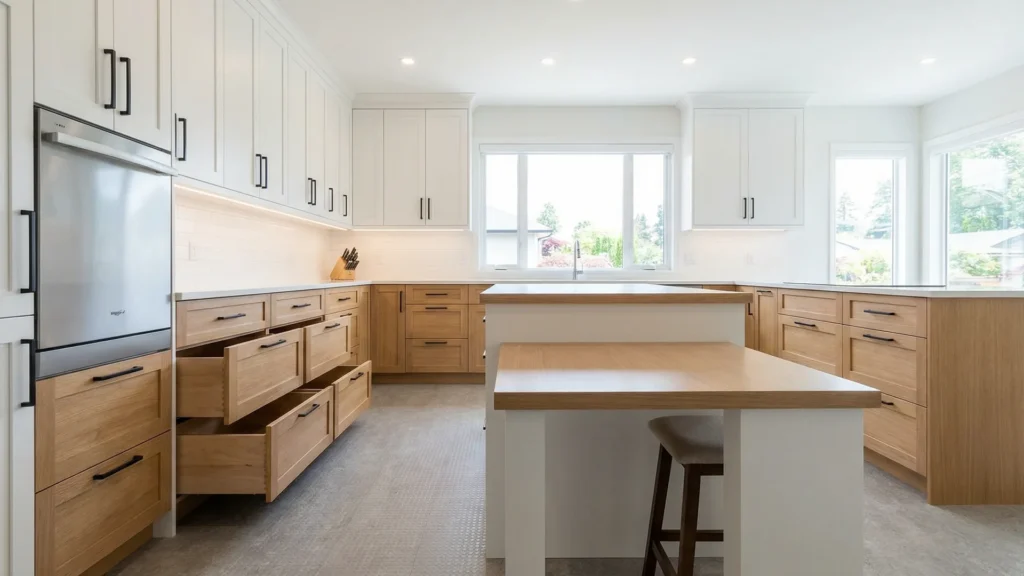
- Accessible Storage: Move frequently used items (dishes, pots, heavy appliances) to lower cabinets or pull-out drawers to avoid the need for step stools or excessive reaching.
- Lighting: Increase task lighting under cabinets and over the stove and sink.
- Appliance Safety: Consider an induction cooktop, which reduces the risk of burns and fires compared to gas or traditional electric coils. Ensure the microwave and oven are at an accessible height.
- Lever Faucets: Replace twist knobs with lever-style faucets that are easier for arthritic hands to operate.
Living Areas and Hallways
- Remove Tripping Hazards: Eliminate all throw rugs, secure loose carpet edges, and clear electrical cords from walking paths.
- Improve Lighting: Ensure all hallways, staircases, and living areas are brightly lit. Add motion-sensor nightlights along the path from the bedroom to the bathroom.
- Clear Pathways: Rearrange furniture to create wide, unobstructed walkways that can accommodate a walker or wheelchair.
- Sturdy Seating: Ensure chairs and sofas are firm and have armrests to assist with standing. Avoid low, deep, or overly soft seating.
Entrances and Stairs
- Ramps: Install a ramp at the primary entrance if there are steps.
- Handrails: Ensure sturdy handrails are installed on both sides of all staircases, extending beyond the top and bottom steps.
- Visibility: Add high-contrast, non-slip tape to the edges of steps to improve visibility.
- Lever Door Handles: Replace round doorknobs with lever handles for easier access.
Executive Home Care offers comprehensive Fall Risk Assessment & Home Safety Audits to identify hazards and recommend specific Aging in Place Home Modifications.
Technology That Makes Aging in Place Safer
Modern technology provides an essential safety net for seniors living alone in Victoria BC, offering peace of mind to both the senior and their family.
- Medical Alert Systems (Personal Emergency Response Systems): Wearable pendants or bracelets with a call button. The best modern systems include automatic fall detection and GPS tracking, ensuring help can be dispatched even if the senior cannot press the button or is away from home.[4]
- Medication Management Dispensers: Automated pill dispensers that unlock at specific times, sound an alarm, and can notify family members if a dose is missed.
- Smart Home Devices: Voice-activated assistants (like Amazon Echo or Google Home) allow seniors to control lighting, adjust the thermostat, or call for help using only their voice.
- Motion Sensors and Monitoring: Non-intrusive sensors placed around the home can track daily activity patterns. If a senior doesn’t get out of bed at their usual time or spends an unusually long time in the bathroom, the system alerts a family caregiver.
- Video Doorbells: Allows seniors to see and speak to visitors without opening the door, enhancing security.
BC Government Subsidies and Funding for Aging in Place
Modifying a home can be expensive, but the British Columbia government offers several financial assistance programs to help seniors age in place safely.
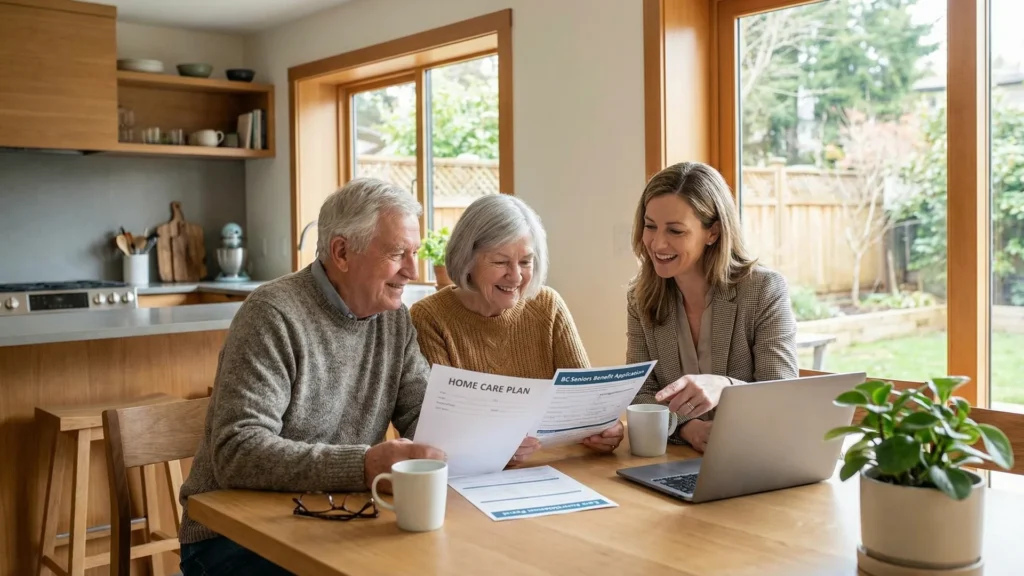
BC Rebate for Accessible Home Adaptations (BC RAHA)
The BC RAHA program provides financial help in the form of rebates to eligible low- and moderate-income households to complete home adaptations for independent living.
- Funding: Up to $20,000 in rebates.
- Eligibility: You must be a resident of BC with limited income and assets, and you or someone in your household must have a permanent disability or loss of ability.
- Covered Adaptations: Handrails, ramps, walk-in showers, widened doorways, and chair lifts. Note that some adaptations require an assessment from an occupational or physical therapist.[5]
Home Renovation Tax Credit for Seniors and Persons with Disabilities
A provincial income tax credit to assist with the cost of certain permanent home renovations that improve accessibility.
- Funding: Calculates a credit based on up to $10,000 of eligible expenditures.
- Eligibility: Seniors (65+) or family members sharing a home with a senior.
Shelter Aid for Elderly Renters (SAFER)
For seniors who rent rather than own, the SAFER program provides monthly cash payments to subsidize rents for eligible BC residents who are age 60 or over and have low to moderate incomes.
Island Health Home Care Assessment — How It Works
In Victoria BC, the regional health authority, Island Health, provides publicly subsidized home and community care services. Understanding this system is crucial for families planning for aging in place.
The Process
- Contact the Community Access Line: You do not need a doctor’s referral. Families can call the South Island Community Access Line directly at 250-388-2273 to request an assessment.
- The Assessment: A case manager (usually a nurse or social worker) will conduct an in-home assessment to evaluate the senior’s physical, cognitive, and social needs.
- Care Plan Development: Based on the assessment, Island Health determines eligibility for subsidized services, which may include community nursing, physical therapy, or home support (assistance with ADLs).
The Limitations of Public Care
While Island Health provides vital services, it is important to understand the limitations:
- Wait Times: There can be significant wait times for assessments and the commencement of services.
- Scope of Service: Publicly funded home support is strictly limited to essential personal care (bathing, dressing, toileting) and medication administration.
- What is NOT Covered: Island Health home support workers do not provide housekeeping, laundry, grocery shopping, meal preparation, companionship, or transportation to appointments.
- Scheduling: Families have little control over the schedule; care workers arrive based on the health authority’s routing, which means a senior might receive their morning care at 10:30 AM instead of their preferred 8:00 AM.
Because of these limitations, most Victoria families rely on private home care agencies like Executive Home Care to supplement public services, ensuring comprehensive support, flexible scheduling, and assistance with instrumental activities of daily living (IADLs) like cooking and cleaning. Contact us for a free consultation to discuss how we can complement your Island Health services — call 250-213-6836.
The Cost of Aging in Place vs. Assisted Living in Victoria BC
One of the most common questions families ask is: Is it cheaper to stay home or move to assisted living?
In Victoria BC, the answer depends entirely on the level of care required.
The Cost of Assisted Living in Victoria
- Publicly Subsidized Assisted Living: Starts at approximately $1,163.90 per month for a single person, calculated at 70% of the senior’s after-tax income. However, waitlists are exceptionally long (often 1–2 years).
- Private Assisted Living: In Victoria, private assisted living facilities typically range from $4,500 to $8,500+ per month, depending on the location, amenities, and level of care required. This includes rent, meals, housekeeping, and basic personal care.
The Cost of Aging in Place (Home Care)
- Light Support (12 hours/week): ~ $1,800–$2,600 per month. (Ideal for companionship, meal prep, and light housekeeping).
- Moderate Support (20 hours/week): ~ $3,000–$4,400 per month. (Includes daily visits for personal care, medication reminders, and meals).
- The “Tipping Point” (40+ hours/week): ~ $6,000–$8,800+ per month.
The Verdict: If a senior requires less than 4 hours of care per day, aging in place with private home care is significantly more affordable than moving to a private assisted living facility. Furthermore, home care allows you to pay only for the exact hours of support needed, whereas facility costs are fixed.
However, if a senior requires 24-Hour Home Care or complex dementia care, the cost of staying at home will exceed the cost of assisted living.
When Aging in Place Is No Longer Safe — Warning Signs
Even with the best planning, there may come a time when aging in place is no longer the safest option. Families should watch for these critical warning signs:
- Frequent Falls: Multiple falls or unexplained bruising, even after home modifications have been made.
- Wandering and Getting Lost: A hallmark of advancing dementia or Alzheimer’s; if a senior is leaving the home and cannot find their way back, 24/7 supervision is required.
- Significant Weight Loss: Often indicates an inability to shop for groceries, prepare meals, or remember to eat.
- Medication Mismanagement: Taking too much, too little, or the wrong medications, leading to health crises.
- Severe Decline in Hygiene: Unkempt appearance, wearing dirty clothes, or a home that has become unsanitary or cluttered with hoarding.
- Caregiver Burnout: When the physical and emotional toll on the primary family caregiver becomes unsustainable, jeopardizing the health of both the caregiver and the senior.
- Frequent Hospitalizations: Repeated trips to the emergency room for preventable issues (dehydration, UTIs, minor injuries).
If these signs appear, it is time to reassess the care plan. This may mean increasing home care hours to Short-Term Live-In Care or beginning the transition to a specialized memory care or long-term care facility.
Victoria BC Case Studies: Real Families, Real Solutions
Case Study 1: The Oak Bay Couple
The Situation: John (82) and Mary (79) lived in their two-story Oak Bay home for 40 years. John was experiencing early-stage dementia, and Mary was struggling with arthritis, making it difficult for her to manage the stairs, cook, and care for John. They wanted to stay together in their home but were overwhelmed.
The Solution: Executive Home Care conducted a home safety audit. They moved the primary bedroom to the main floor, installed grab bars in the main floor bathroom, and arranged for a caregiver to visit 4 hours a day, 5 days a week. The caregiver handled meal preparation, light housekeeping, and provided Alzheimer’s & Dementia Care for John, giving Mary much-needed Respite Care.
The Result: John and Mary remained safely in their home for three more years, delaying the need for a facility and saving thousands of dollars annually.
Case Study 2: Recovering Independence in Saanich
The Situation: Margaret (85) lived alone in Saanich. After a severe fall resulting in a hip fracture, she spent three weeks in Victoria General Hospital. Her daughter, who lived in Vancouver, was terrified Margaret would have to move to assisted living.
The Solution: Before discharge, Executive Home Care coordinated Post Surgery Care and Home Safety Modifications. They removed tripping hazards, arranged for a hospital bed on the main floor, and provided 8 hours of daily care during the first month of recovery, assisting with mobility, bathing, and physiotherapy exercises.
The Result: Margaret successfully rehabilitated at home. After two months, she reduced her care to just two visits a week for Personal Care & Health Services and grocery shopping, maintaining her independence.
Local Victoria Resources for Seniors
Victoria offers a robust network of resources to support seniors aging in place:
- Island Health Community Access Line: (250-388-2273) The starting point for publicly subsidized home care assessments.
- BC211: A free, confidential, multilingual service that connects people to community, health, and social services, including senior support programs.
- Seniors Serving Seniors (Victoria): Offers programs like Return to Health (support after hospital discharge) and peer support.
- Silver Threads Service: Provides programs, services, and information to support seniors in the Greater Victoria area.
- Better at Home (United Way): A program that helps seniors with simple day-to-day tasks (like light housekeeping and yard work) to help them maintain their independence.
How Professional Home Care Makes Aging in Place Possible
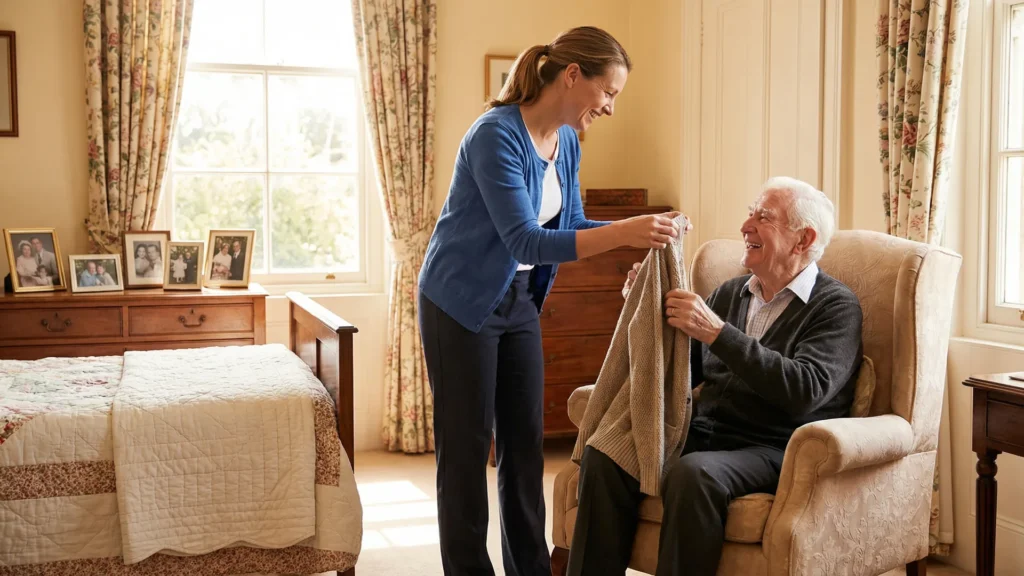
While family support and home modifications are foundational, professional home care is often the critical component that makes long-term aging in place sustainable.
Professional caregivers bridge the gap between what a senior can do safely and what they struggle with. In addition to daily support, professional home care plays a direct role in fall prevention — caregivers identify new hazards, monitor mobility changes, and provide physical assistance during high-risk activities like bathing and stair navigation. Services are highly customizable:
- Personal Care: Dignified assistance with bathing, dressing, and toileting via Personal Care & Health Services.
- Health Coordination: Medication reminders, vital sign monitoring, and communication with healthcare providers through professional Medication Management.
- Life Management: Nutrition & Meal Coordination, light housekeeping, laundry, and Medical Transportation Services.
- Companionship: Meaningful social interaction through Companion Care & Social Support, engaging in hobbies, and accompanying seniors on walks or outings to prevent the serious health consequences of isolation.
By handling the heavy lifting of daily care, home care for seniors in Victoria BC allows family members to return to their roles as daughters, sons, and spouses, rather than exhausted full-time caregivers. The result is a healthier, happier household for everyone.
Why Executive Home Care for Aging in Place Victoria BC
At Executive Home Care, we understand that aging in place Victoria BC is about more than just staying in a house; it is about maintaining a high quality of life, dignity, and joy. As the leading provider of home care for seniors in Victoria BC, we bring together every service a family needs under one trusted roof.
Unlike traditional agencies that only provide basic caregiving, we offer a comprehensive suite of services designed specifically for the Victoria BC community. From our initial Fall Risk Assessment & Home Safety Audit to coordinating Aging in Place Home Modifications and providing elite Personal Care & Health Services, we manage every aspect of the aging in place journey.
Our caregivers are rigorously vetted, highly trained, and deeply compassionate. We don’t just care for your loved one; we partner with your family to ensure their home remains their sanctuary.
Ready to explore aging in place Victoria BC options for your loved one? Contact Executive Home Care today at 250-213-6836 to book your free consultation and home safety assessment — and take the first step toward a safer, more independent life at home in Victoria BC.

Frequently Asked Questions
What does aging in place mean?
Aging in place refers to a senior’s ability to live in their own home and community safely, independently, and comfortably, regardless of age, income, or ability level, rather than moving to a residential care facility.
How much does it cost to age in place in Victoria BC?
The cost varies widely based on needs. Minor home modifications might cost a few hundred dollars, while extensive renovations (like a walk-in shower) can cost thousands. Private home care in Victoria ranges from $35 to $55 per hour. For seniors needing less than 4 hours of care daily, aging in place is generally much cheaper than the $4,500+ monthly cost of private assisted living.
What are the most important home modifications for seniors?
The most critical modifications focus on fall prevention: installing grab bars in the bathroom, adding non-slip surfaces to tubs and showers, removing throw rugs, improving lighting in hallways and stairs, and installing sturdy handrails on both sides of all staircases.
Does the BC government pay for home modifications for seniors?
Yes, eligible low- and moderate-income seniors can apply for the BC Rebate for Accessible Home Adaptations (BC RAHA), which provides up to $20,000 in rebates for modifications that support accessibility and independent living.
How do I get a home care assessment from Island Health?
You can request an assessment by calling the Island Health Community Access Line directly at 250-388-2273 (South Island). You do not need a doctor’s referral to request an assessment for publicly subsidized services.
What is the difference between home care and home health care?
Home care (often called personal care or companion care) assists with activities of daily living like bathing, meal prep, and housekeeping. Home health care involves skilled medical services provided by registered nurses or therapists, such as wound care, IV therapy, or physical rehabilitation.
Can a senior with dementia age in place?
Yes, many seniors with early to mid-stage dementia successfully age in place with the right support. This requires a secure home environment (to prevent wandering), medication management, and specialized dementia home care. However, as the disease progresses to late stages, 24/7 care or a specialized memory care facility is often required for safety.
How do I know when it’s time to stop aging in place and move to a facility?
Key warning signs include frequent falls, wandering, significant unexplained weight loss, severe medication mismanagement, inability to maintain basic hygiene, or when the primary family caregiver is experiencing severe burnout. If 24/7 complex medical care is needed, a facility may be the safest option. For guidance specific to your situation, contact Executive Home Care for a free aging in place Victoria BC consultation at 250-213-6836.
References
- Office of the Seniors Advocate British Columbia. (2025). Monitoring Seniors Services 2025. https://www.seniorsadvocatebc.ca/
- AARP. (2024). Home and Community Preferences Survey: A National Survey of Adults Age 50 and Older. https://www.aarp.org/home-living/home-community-preferences-survey-2024/
- BC Injury Research and Prevention Unit. (2025). Falls in Older Adults. https://www.injuryresearch.bc.ca/injury-priorities/falls-older-adults
- National Council on Aging (NCOA). (2026). The Best Medical Alert Systems in 2026. https://www.ncoa.org/product-resources/medical-alert-systems/best-medical-alert-systems/
- BC Housing. (2025). Rebate for Accessible Home Adaptations (BC RAHA) — Program Overview. https://www.bchousing.org/housing-assistance/BC-RAHA/program-overview